
South Park Characters: What Their Shapes and Colors Tell You
Study South Park characters through their silhouettes, hats, hair, and color blocks, with 12 illustrated profiles and practical original-character design advice.

South Park characters are unusually easy to recognize at a small size. Their designs rely on broad color areas, readable head shapes, and a handful of accessories. You do not need a detailed face to distinguish Kenny's orange hood from Kyle's green hat. This makes the cast a useful reference for anyone thinking about visual clarity in an illustration. For a character built around your own shapes and colors, try South Park Character Creator.
The images here come from the South Park Public Library and are presented as a character study. Our focus is the relationship between shape and recognition: which details carry identity, which ones can disappear in a crop, and what an original cartoon design can learn from that balance.
Start with the outer contour
Before examining buttons or expressions, follow the edge of each character. A hat can broaden a head, long hair can join the head to the torso, and a chair or pair of crutches can extend the figure's footprint. Those large decisions remain visible when the picture is reduced. Tiny surface details often do not.
Kenny McCormick: a frame within a frame
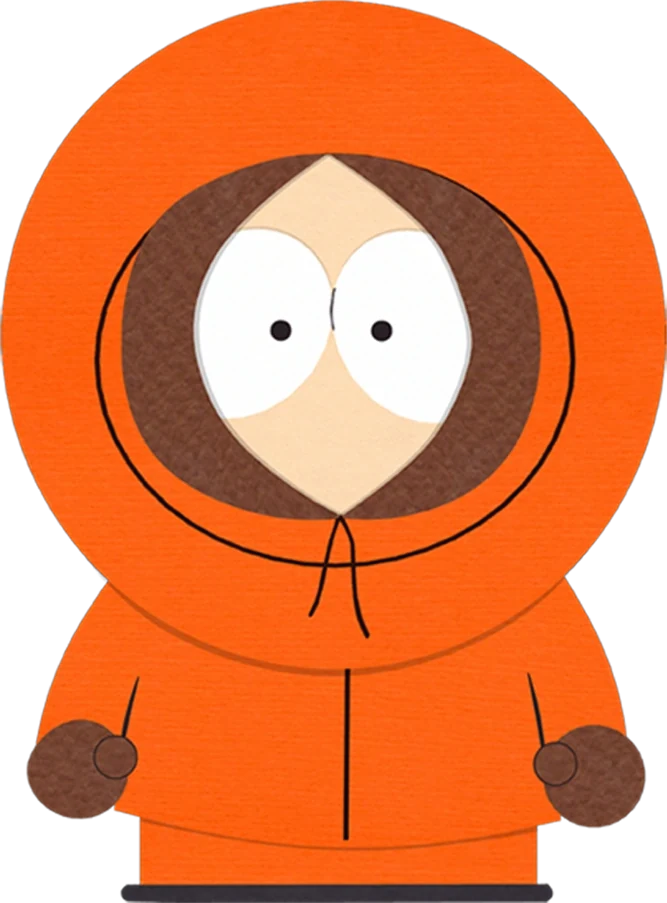
The hood gives Kenny a continuous orange outline, while its dark opening creates a second frame around the face. The eyes occupy that small inner space. This is a useful example of emphasis through enclosure: the outer garment directs attention toward the few features that remain exposed.
Kyle Broflovski: an angular head shape
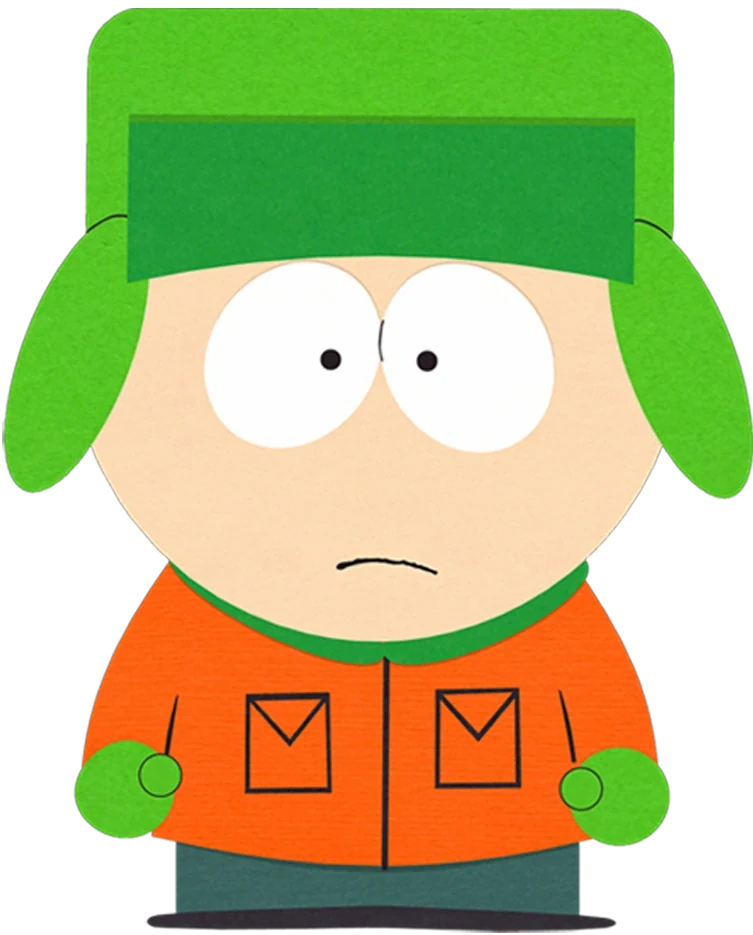
Kyle's green hat introduces a squared upper edge and hanging side shapes. Below it, the orange coat forms a separate color block. The face sits between these two strong areas, so recognition depends on the whole arrangement rather than one isolated accessory or one shade of green.
Eric Cartman: width as an identifier
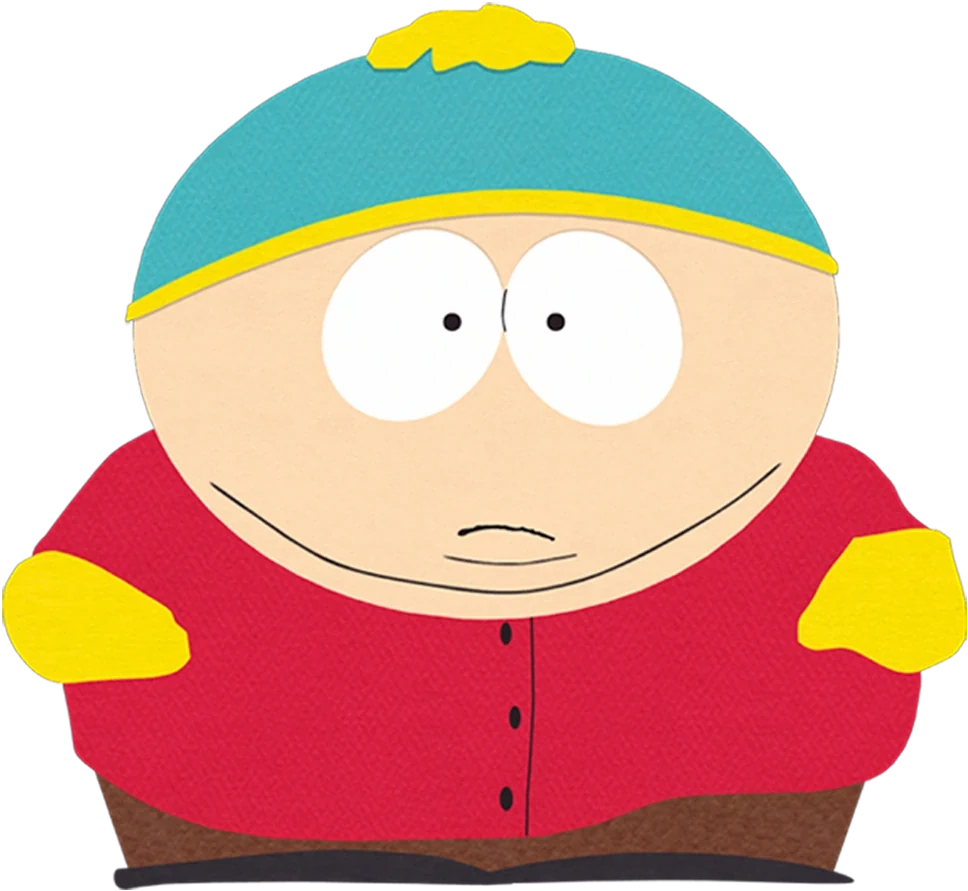
Cartman's jacket spreads across a wider body than the other central boys' coats. Yellow gloves mark its edges, and the turquoise hat provides a cooler area above the red. If you only study the palette, you miss how much the wide, rounded silhouette contributes to his identity.
Stan Marsh: a compact stack
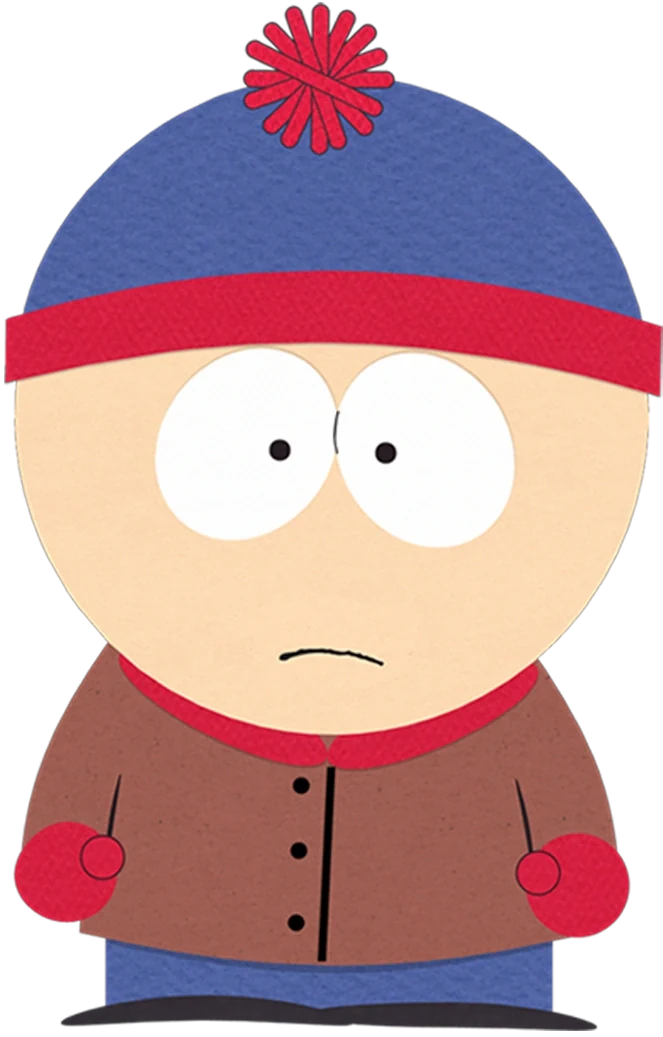
Stan's hat, face, brown jacket, and dark trousers form a compact vertical arrangement. The red band, pom-pom, and gloves repeat an accent at different heights. That repetition helps connect the design, while the relatively quiet coat leaves the hat as the most prominent recognition cue.
Look at hair as a solid shape
Wendy Testaburger
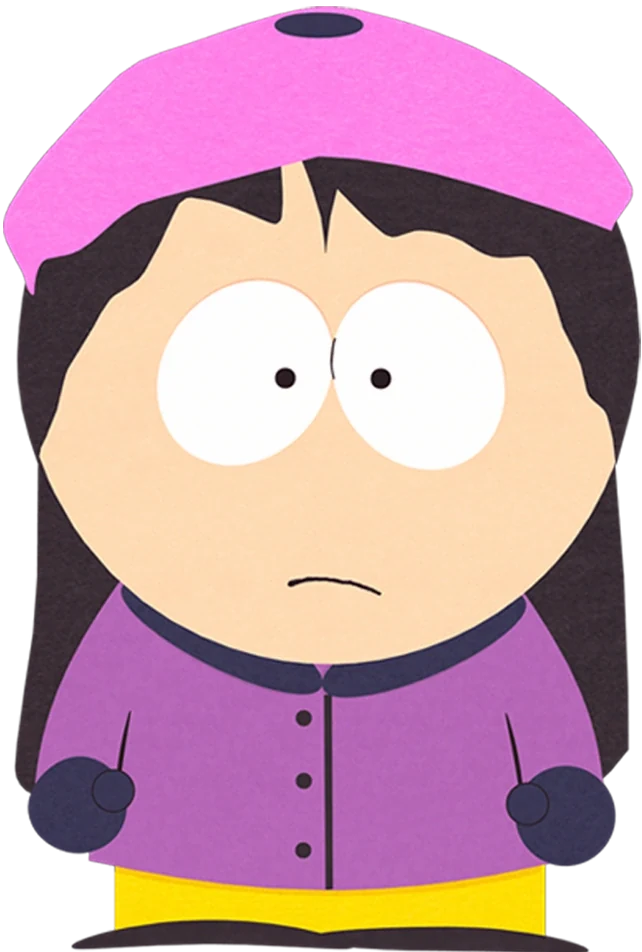
Wendy's dark hair extends down the sides of her purple jacket. It creates a surrounding shape rather than a collection of fine strands. The pink beret rests above that dark area. Together, the long hair and soft hat make an outline that differs sharply from Stan's compact winter cap.
Bebe Stevens
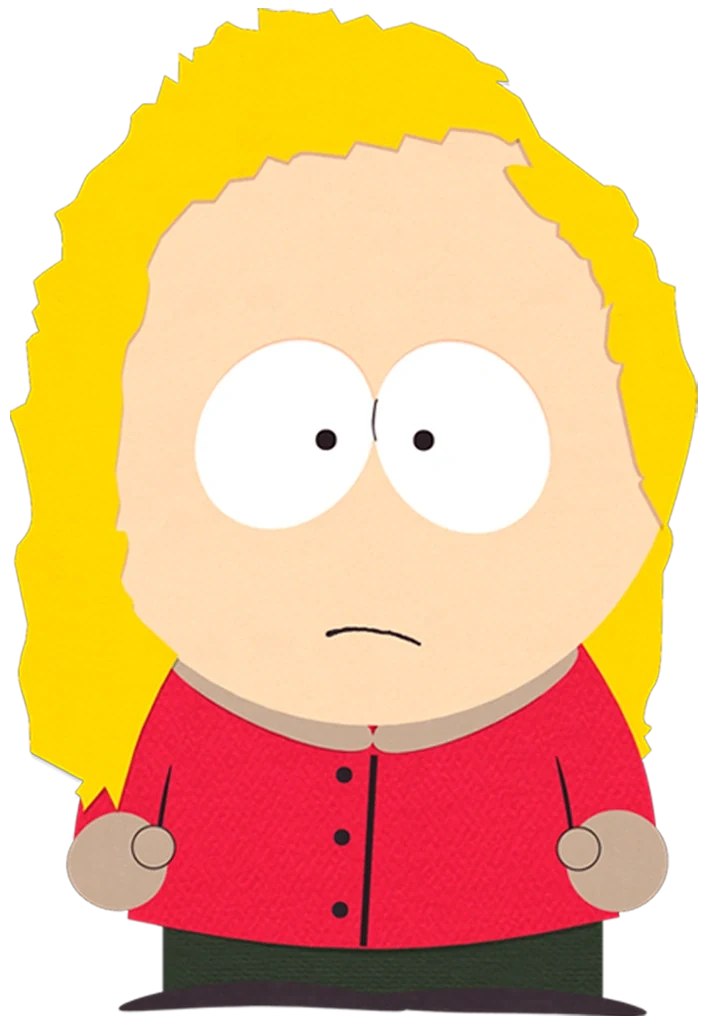
Bebe's blond hair fills much of the space around her head and shoulders. Its uneven edge remains visible against the red top. Comparing her with Wendy reveals two different ways of framing a face: a dark, straighter border and a lighter, fuller mass with a more varied contour.
Butters Stotch
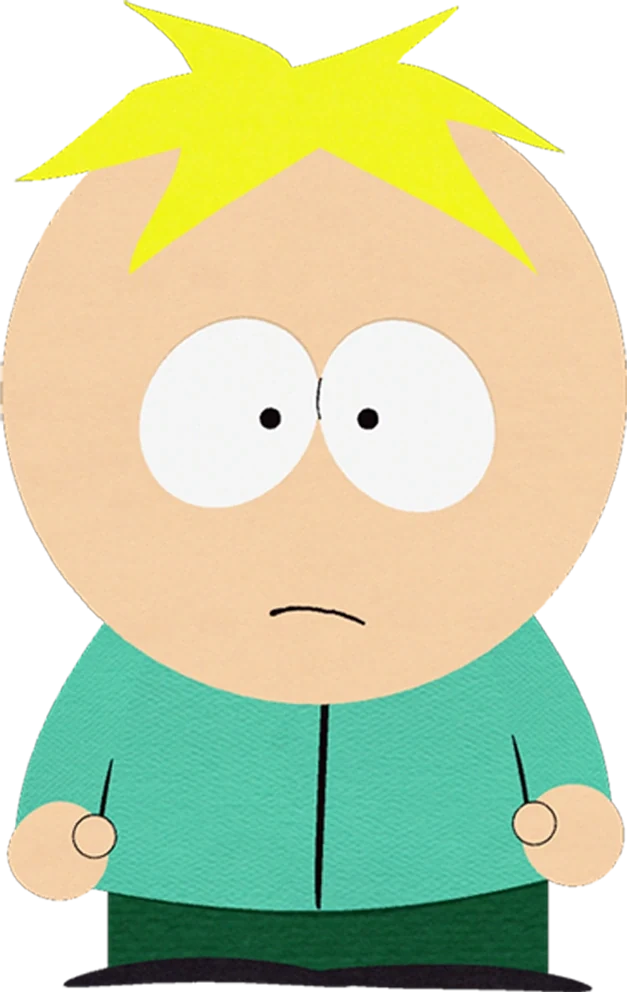
Butters uses only a small cluster of blond points above the head. His turquoise shirt stays visually simple beneath it. The gap between that modest hairstyle and Bebe's larger hair shape is instructive: matching hair color does not mean matching silhouette, scale, or overall visual rhythm.
Tweek Tweak
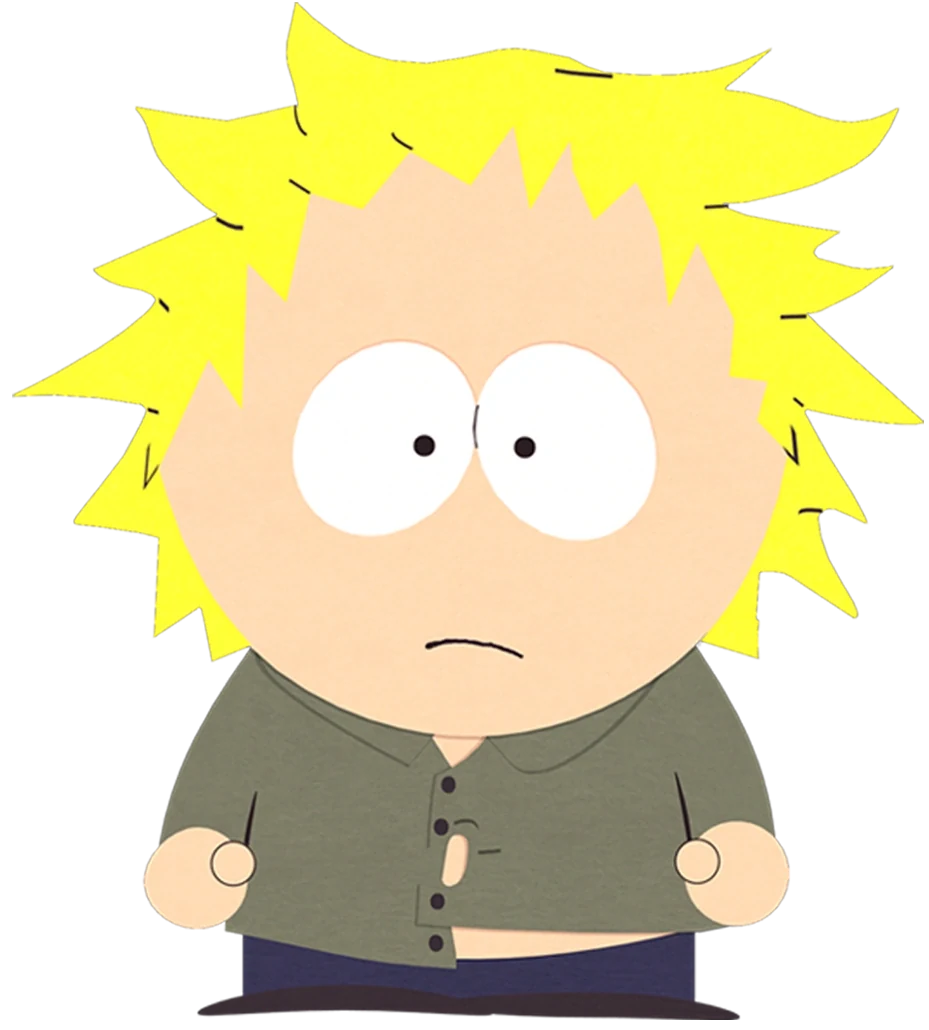
Tweek's hair pushes outward in several directions. The olive shirt has an uneven front closure, adding another irregular element lower in the figure. These visible details give the image more directional energy than Butters' restrained outline, without requiring additional background objects or elaborate facial rendering.
Color is a relationship, not a label
Craig Tucker
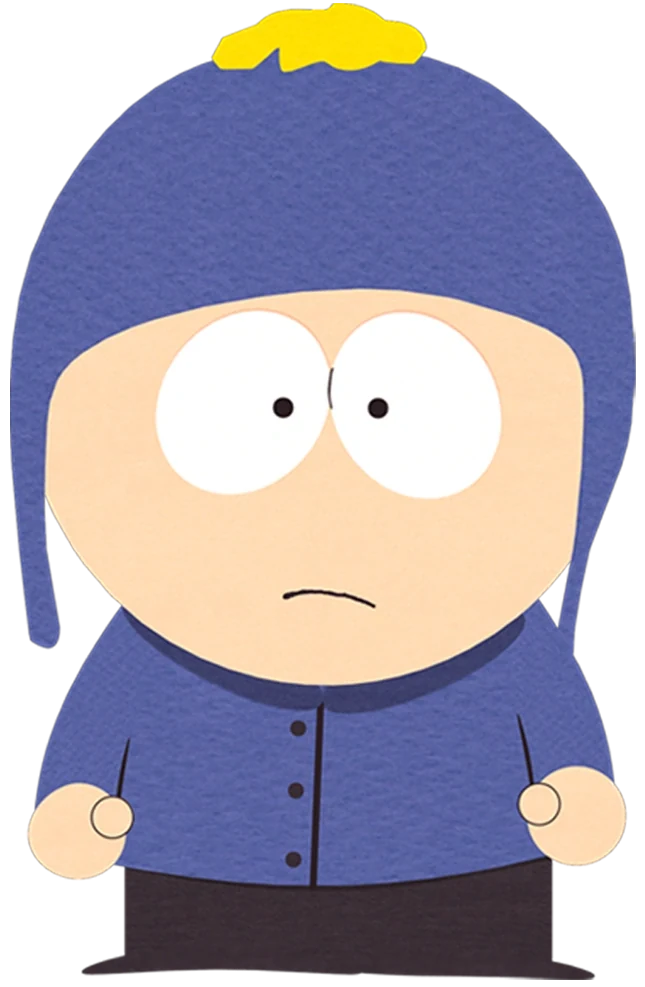
Craig's blue coat and cap sit close together in color, creating a more unified figure. The small yellow pom-pom is a concentrated accent. Next to Kyle, Craig demonstrates why an earflap hat needs context: its hue, top shape, and relationship to the jacket distinguish the two designs.
Tolkien Black
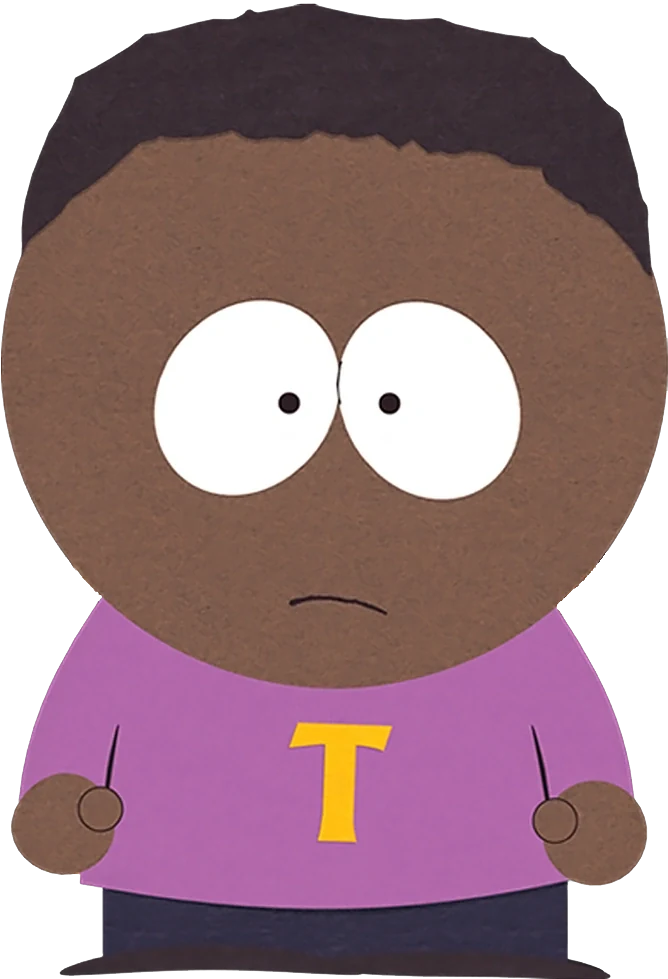
Tolkien's purple shirt supports a bright yellow T. The shirt is the larger information carrier; the letter is a secondary detail. At a reduced size, test whether the purple block and hair outline still read before relying on the letter to identify the character for your audience.
Clyde Donovan
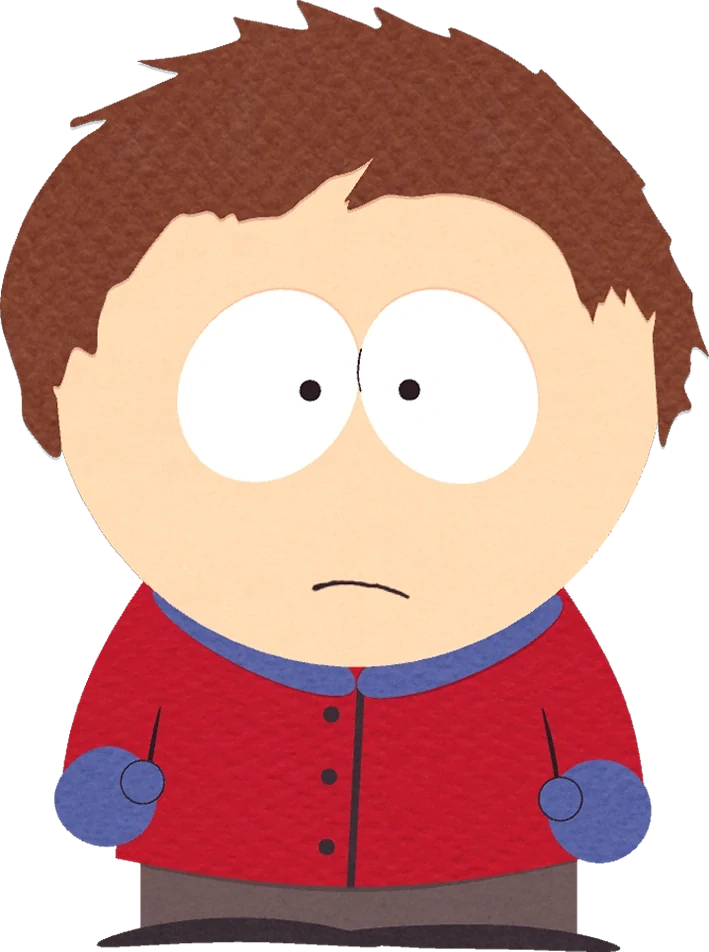
Clyde wears a red jacket with blue trim and gloves, beneath uncovered brown hair. Cartman also wears red, but the upper outline and body proportions differ. Placing their images beside one another is a better identification exercise than memorizing “red jacket” as though it were a unique label.
Ike Broflovski
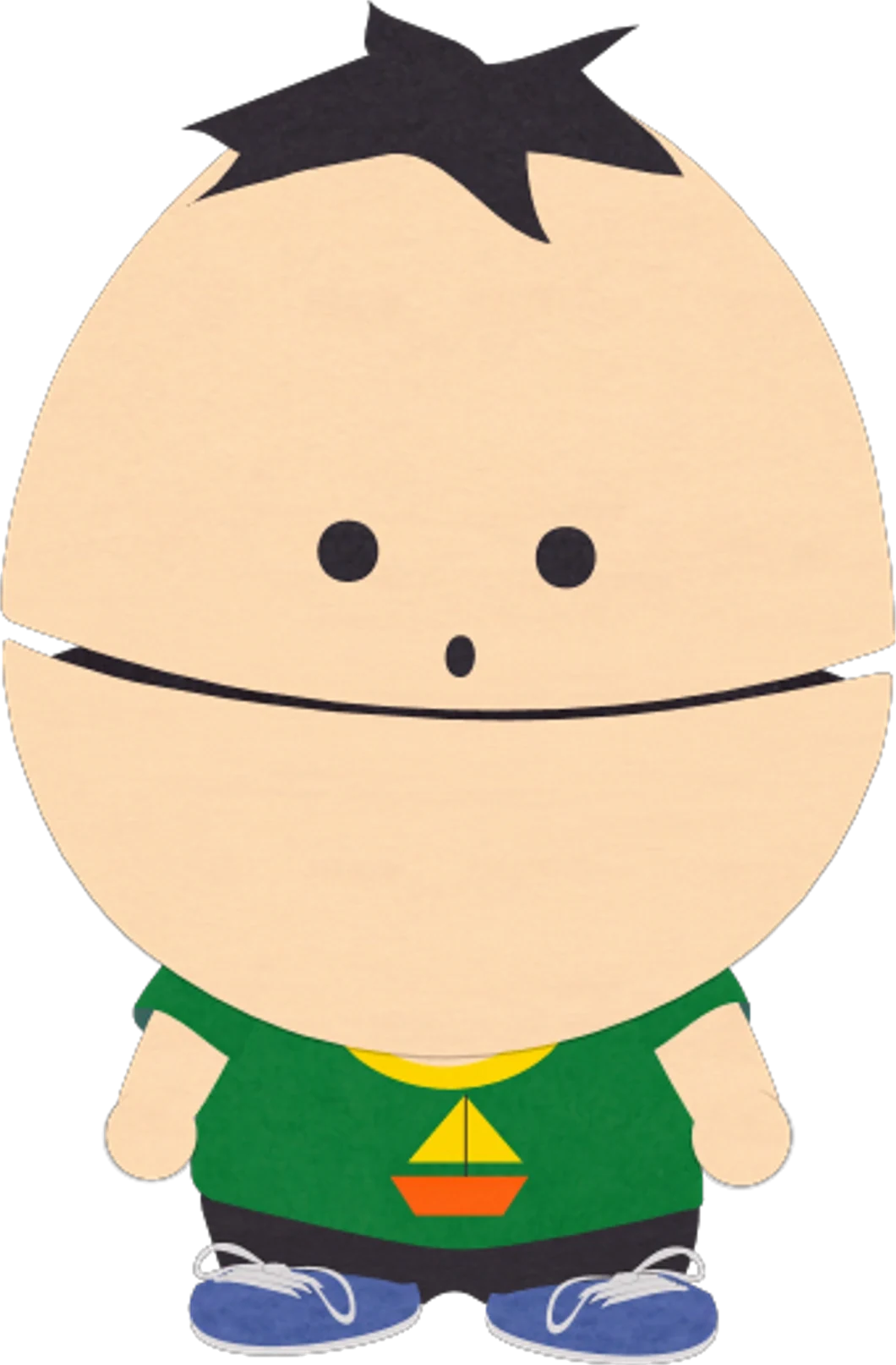
Ike's small body, broad head, separated mouth line, and dark hair tuft use a different proportion system from the older children. His green top includes a little sailboat. The dominant lesson is scale: a tiny clothing emblem cannot substitute for the distinctive head-to-body relationship in this image.
Turn the reference into an original visual brief
If you came here looking for a South Park character creator, use the gallery to decide what your own character should communicate. Choose an outline first: a wide raincoat, short triangular hair, or an oversized knit scarf. Give the character one main clothing color and one accent. A South Park character maker brief becomes clearer when those decisions work together.
For example, an original neighborhood delivery rider could have a square teal helmet, a narrow orange vest, and a single mailbag. Each choice identifies an occupation or changes the contour. Adding five unrelated accessories would make the design harder to read.
When reviewing a draft image, ask three questions. Can you recognize the figure without reading the caption? Does the main accessory survive a smaller crop? Are the eyes and mouth still readable where the background meets the face? If one answer is no, change the largest ambiguous shape before adjusting fine details. You can develop an illustration brief on the homepage, then browse the blog for more composition ideas. Choose a simple silhouette and a restrained color palette when you try South Park Character Creator.
A two-pass comparison
Use the gallery for a simple comparison. First, look only at the outside edge of Kyle and Kenny. Kyle has a wider, more angular hat, while Kenny's hood surrounds the face in a continuous curve. Second, look at the large interior color areas: Kyle divides green and orange; Kenny stays predominantly orange around a darker opening. Each pass answers a different visual question.
Apply the same method to an original illustration. Cover the name and ask whether the outer shape is distinct from other figures in the scene. Then inspect the color arrangement. If two characters have similar outlines and clothing colors, changing one dominant feature will usually explain more than adding several small decorations. Keep the revised feature connected to the person: a rain hat can support an outdoor role, while a large scarf can suggest a winter setting. The design becomes easier to remember when those decisions belong together.
Why the Warcraft reference needs its own label

Make Love, Not Warcraft is the episode behind the South Park World of Warcraft connection. The four boys face a player whose powerful game character repeatedly kills theirs. Cartman develops a plan to strengthen the group, and the story contrasts their increasingly obsessive gaming with the fantasy world on their screens.
The computer-lab image offers a different design question from the clean portraits above. Bodies and faces have changed, but large costume cues remain: Kyle's green hat, Kenny's orange hood, and Stan's blue-and-red cap. Cartman wears his red jacket without the usual cap, making body shape and clothing more important to his identification.
This comparison is useful for a South Park maker study because it shows which details survive a changed context. A standard Cartman South Park portrait explains one version; the episode frame explains another. Judge each image according to the version it actually depicts. To develop a character built around your own shapes and colors, try South Park Character Creator.